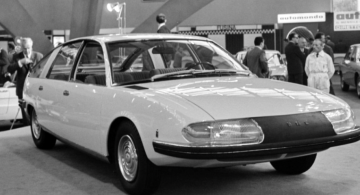
For decades, automotive design was rigidly bound to the traditional three-box silhouette. Cars were status symbols shaped like motorized carriages—boxy, imposing, and chemically indifferent to the air they cut through. However, between the late 1960s and the early 1970s, a quiet revolution rewrote the rules of car styling. This was the dawn of the fastback era, a design movement born from the marriage of aerospace-inspired aerodynamics and forward-thinking Italian styling houses.
The Pursuit of Efficiency: The Birth of the Streamlined Tail
The transition toward what we now call the “fastback” or “liftback” shape wasn’t merely a cosmetic trend; it was a technical necessity. As European highways expanded and average cruising speeds rose, engineers realized that pushing a brick-shaped vehicle through the air was an enormous waste of mechanical energy.
The critical breakthrough didn’t happen at the front of the car, but at the rear. Traditional notches created massive zones of low pressure and air turbulence directly behind the rear window, acting like an invisible parachute pulling the vehicle backward. By smoothing out the roofline into a continuous, sloping plane that cascaded gently toward the rear bumper, designers managed to keep the airflow attached to the bodywork for longer. This drastic reduction in aerodynamic drag meant higher top speeds, lower fuel consumption, and unprecedented high-speed stability.
The Catalyst: Pininfarina’s 1967 Masterpiece for BMC
While multiple manufacturers were experimenting with fastback curves in the late sixties, the ultimate catalyst for modern family car design came from Turin. In 1967, Leonardo Fioravanti, working under the legendary banner of Pininfarina, penned a radical concept car for the British Motor Corporation (BMC) based on the mechanicals of the Austin 1800.
Known as the BMC 1800 Aerodinamica, this concept was nothing short of a shockwave. It discarded the traditional upright sedan architecture in favor of a sleek, flowing, single-volume shape with a fastback tail. Though BMC management was famously too conservative to put the Aerodinamica into production, the rest of the automotive world was paying close attention.
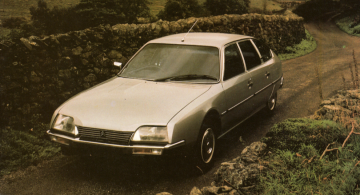
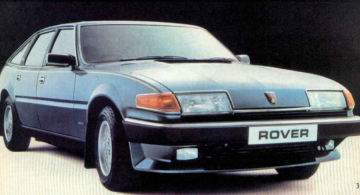
Pininfarina had effectively drawn the blueprint for the next two decades of European family cars. The concept’s DNA directly inspired mainstream icons like the Rover SD1, the Lancia Gamma, and the sleek Citroën CX.
From Concept to Mass Market: The Citroën GS Triumph
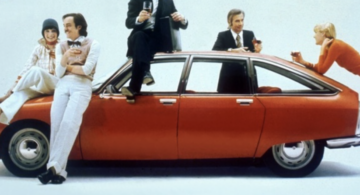
Nowhere did this aerodynamic philosophy bear more impressive fruit than in France with the launch of the Citroën GS in 1970. Designed by Robert Opron, who was deeply influenced by the aerodynamic studies of the era, the GS took the teardrop fastback silhouette and adapted it brilliantly for a mass-market family car.
The Citroën GS became a masterclass in efficiency. Its sloping roofline, combined with a high, truncated tail (Kammback effect), allowed it to achieve an astonishingly low coefficient of drag for its class. This aerodynamic sleekness meant that even with a modest, air-cooled flat-four engine, the GS could achieve high cruising speeds with remarkable fuel economy. It proved to the entire industry that the fastback shape was not just for high-end prototypes or sports cars, but the ideal solution for everyday transport.
Form Meets Function: The Fastback’s Golden Era
What began as an elite styling exercise quickly trickled down to everyday motoring. Manufacturers across Europe realized that the fastback shape offered a brilliant compromise: it delivered sports-car aesthetics and high-speed efficiency without sacrificing the cabin space required for a family vehicle.
By the mid-1970s, the sloping rear profile became synonymous with modern motoring. From luxury cruisers to mass-market family transport, the industry embraced the fact that a car could be incredibly practical while boasting aerodynamics that would have been unthinkable just a decade prior.
Today, as modern automotive engineering prioritizes electric vehicle range through extreme aerodynamic efficiency, we are witnessing a massive resurgence of this iconic silhouette. The modern “four-door coupe” and sloping EV profiles are not a new invention—they are the direct descendants of a golden era where artistry perfectly calculated the physics of the wind.